Acute Pancreatitis

Acute pancreatitis

Acute pancreatitis is a sudden inflammation of the pancreas. Although usually mild, it is the most serious, potentially fatal complication of gallstones.

What is acute pancreatitis?

Acute pancreatitis is a sudden inflammation of the pancreas, affecting nearby organs to a varying extent. Although usually mild, it is the most serious, potentially fatal complication of gallstones.

Pancreatic pain is suspected with a band-like, piercing pain in the upper middle abdomen (epigastrium), spreading to the back, relieved by leaning forward or curling up (fetal position).

The blood test diagnosis is based on serum lipase, with a threshold of 3 times the upper normal limit. An abdominal CT scan is the key examination: it is requested urgently if the diagnosis is uncertain, and is essential between day 2 and day 3 to assess severity.

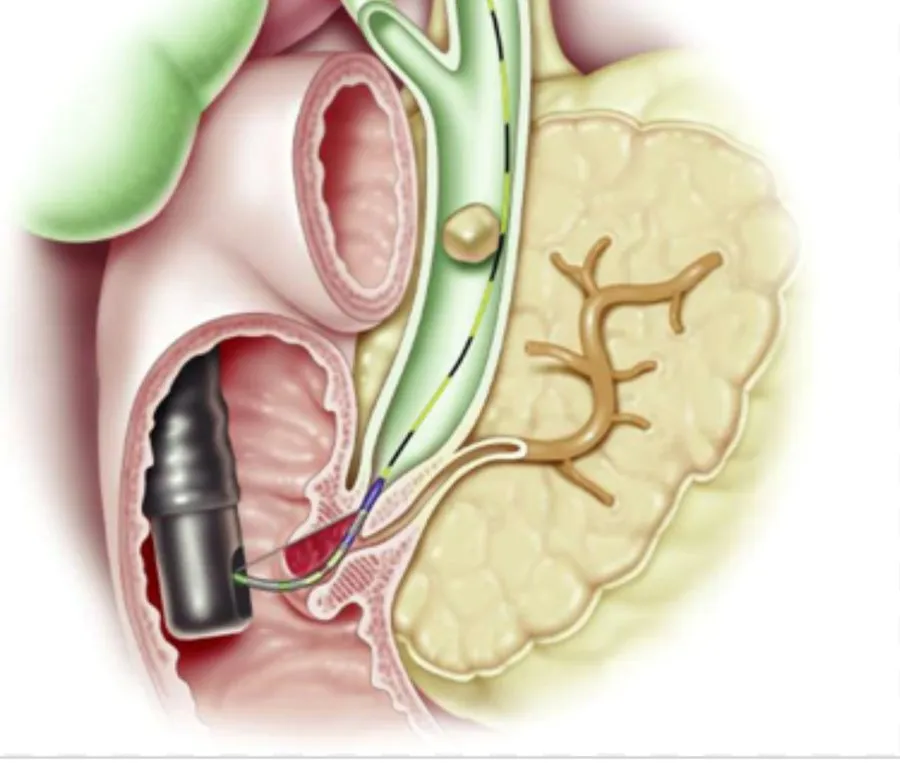
The two main causes are gallstones and alcohol, which account for more than 80% of cases. About 20% of pancreatitis cases are "non-alcoholic, non-biliary": metabolic causes (high blood calcium, high blood lipids), medications, cancer, duct abnormalities (pancreas divisum, IPMN, paraduodenal pancreatitis), infections, after ERCP, after trauma, or genetic causes.

Acute pancreatitis always requires hospitalization. Intensive care is needed as soon as there is organ failure. The principle is simple: bowel rest and pain relief. The cause must then be identified and treated.

In 70 to 80% of cases, pancreatitis is mild and resolves within a few days. But in 20 to 30% of cases, it is severe (known as necrotizing pancreatitis) and life-threatening. Overall mortality is around 5% and can reach 20%.