ERCP (Endoscopic Retrograde Cholangiopancreatography)

ERCP — bile ducts and pancreas

ERCP is an examination of the bile ducts and pancreas that combines endoscopy and X-ray imaging (fluoroscopy).

What is ERCP?

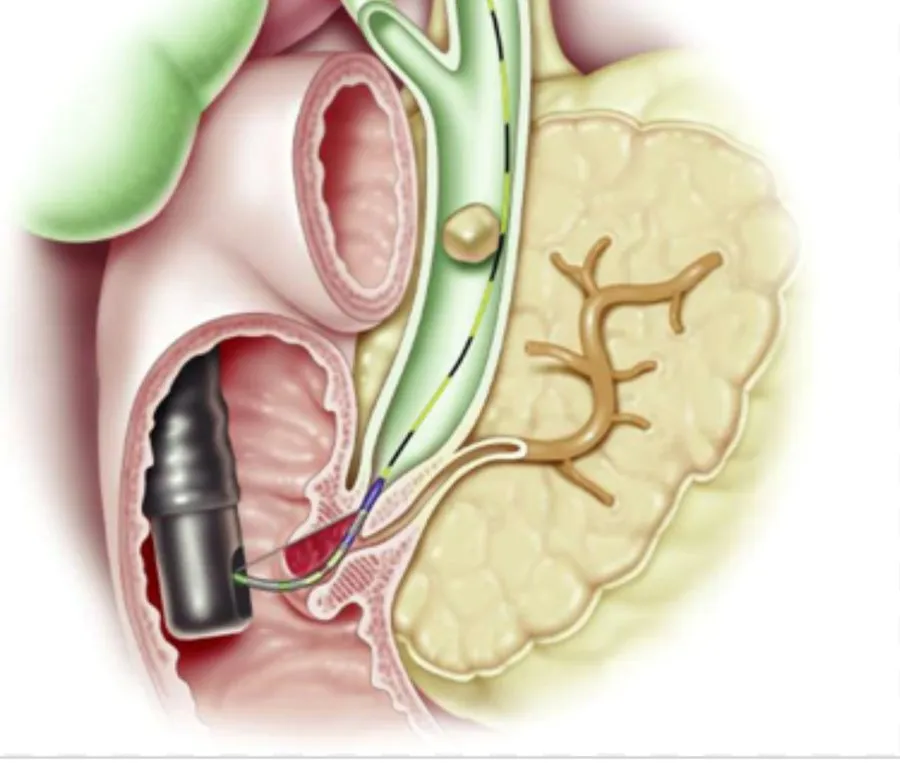
Endoscopic retrograde cholangiopancreatography (ERCP) is an examination of the bile ducts and pancreas that combines endoscopy and X-ray imaging. Indications are numerous: stones in the common bile duct, benign or malignant obstruction of the common bile duct, post-operative bile duct injuries…

ERCP is performed under general anesthesia, in a room equipped with an X-ray image intensifier. A side-viewing endoscope (duodenoscope) is used to face the papilla (the opening of the bile and pancreatic ducts). The bile ducts are then cannulated with a guide wire, which is used to pass instruments to opacify, dilate, clear or stent the bile duct depending on the type of lesion.

The first step of treatment is to cut the sphincter (endoscopic sphincterotomy) with an electric scalpel. Stones can then be removed with a balloon, sometimes after being crushed with a snare. If there is a narrowing (stricture), it can be dilated with a balloon or a dilator; a temporary or permanent stent often needs to be placed in this case.
You must fast completely (no drinking, eating or smoking) for the 6 hours before the examination.

Apart from complications related to anesthesia, complications of ERCP may occur even when the examination is performed with competence and safety in line with current scientific standards:

  • Acute pancreatitis
  • Infection of the bile ducts or gallbladder
  • Perforation of the digestive wall
  • Digestive bleeding

Other complications are very rare, such as cardiovascular or respiratory problems.